Caregiver Fraud Prevention Guide
Caregiver fraud is not always an obvious act of theft. Financial exploitation can happen gradually when a caregiver gains access to an older adult’s money, bank accounts, property, benefits, or financial information. You may notice abrupt changes in banking accounts and practices, unexplained disappearances of money or possessions, and other warning signs that a loved one is being financially abused.

The The National Institute on Aging recognizes financial abuse as including theft or misuse of money and belongings, unauthorized use of credit cards and bank accounts, and unauthorized changes to wills, bank accounts, insurance policies, or property titles. recognizes financial abuse as including theft or misuse of money and belongings, unauthorized use of credit cards and bank accounts, and unauthorized changes to wills, bank accounts, insurance policies, or property titles.
Why Are Caregiving Arrangements Vulnerable to Financial Exploitation?
Several structural vulnerabilities in caregiving arrangements make caregiver fraud and financial exploitation possible.
- Caregivers May Have Access to Money: When caregivers have access to cash, cards, accounts, shopping, and bill payments for the vulnerable individual, they can take advantage of this access.
- Caregivers May Have Access to the Home: Access to valuables and personal documents can create additional risks.
- The Person Receiving Care May Depend on the Caregiver: Dependence on the caregiver can make it harder for the person receiving care to question or report suspicious behavior.
- Families May Live Far Away: Geographic distance from family members and other trusted parties can reduce oversight of caregivers.
- Cognitive or Communication Difficulties Can Increase Vulnerability: Some people may have difficulty identifying or reporting exploitation.
How Can You Build a Fraud-Resistant Caregiving System?
Financial exploitation is a common form of elder abuse, with as many as 17% of Americans 65 and older reporting victimization. About one in 44 cases reaches protective services; neither estimate is caregiver-specific. Caregiver fraud prevention is most effective when financial safeguards are built into the caregiving arrangement from day one.

Start With the Principle of Least Access
It’s important to give caregivers only the access necessary to perform their responsibilities. For example:
- A caregiver who buys groceries may not need access to a full bank account.
- A caregiver who drives someone to appointments may not need access to financial records.
- A caregiver who handles household bills may need a different level of authorization.
Separate Caregiving Duties From Financial Control
Set Up a Debit Card With Spending Limits
Enlist a Second Set of Eyes
Create an Emergency Plan
Set Up Transaction Alerts
Review Statements Regularly
How Can Families Monitor Caregiver Expenses Without Creating Conflict?
There are several ways for families to monitor caregiver expenses without creating unnecessary tension or conflict, like establishing expectations during the hiring process, requiring receipts, and keeping an expense log.
Establish Expectations Before Hiring
Require Receipts
Requiring transaction receipts can protect both the person receiving care and the caregiver.
Maintain an Expense Log
Keeping a caregiver expense log, formatted as in the example below, can make it easier to identify which transactions are legitimate and which may not be.
Suggested fields:
method
Schedule Financial Reviews
What Are the Signs of Caregiver Fraud?
- Money or valuable property goes missing: Unexplained missing cash, jewelry, electronics, checks, credit cards, financial documents, or other valuables can indicate theft.
- Unexplained bank withdrawals or ATM transactions: Unusual ATM withdrawals, electronic transfers, wires, or large cash withdrawals may warrant investigation.
- Bills suddenly go unpaid: If a caregiver is responsible for paying bills, but utilities, rent, medical expenses, or taxes become overdue despite adequate funds, something may be wrong.
- The caregiver becomes secretive about money: If a caregiver refuses to explain expenses, will not provide receipts, prevents family members from reviewing transactions, or becomes unusually defensive about finances, it could indicate fraud.
- Signatures or financial documents look suspicious: Forged or inconsistent signatures, unexplained changes to wills, beneficiary designations, account ownership, or other financial documents are red flags.
- The older adult suddenly becomes afraid or withdrawn: Financial exploitation may also have behavioral signs, such as fear, anxiety, withdrawal, or reluctance to discuss finances.
- The caregiver controls who can speak to the older adult: Isolation or controlling behavior, including preventing relatives from visiting, answering questions on the person’s behalf, or refusing to allow private conversations, can indicate abuse.
- Sudden changes to wills, beneficiaries, or property ownership: Unexpected changes to estate documents, property titles, or beneficiaries may be red flags but do not prove caregiver fraud.
What Should You Do If You Suspect Caregiver Fraud?
- Recognize: Identify the unusual transaction, missing property, or concerning behavior.
- Record: Preserve:
- Bank statements
- Receipts
- Emails
- Text messages
- Contracts
- Account records
- Transaction histories
- Protect: Contact the bank promptly; secure accounts, financial documents, and personal information.
- Report: Several reporting options may be appropriate. You can contact Adult Protective Services, police, or the National Elder Fraud Hotline (for adults 60 and older) at 1-833-FRAUD-11.

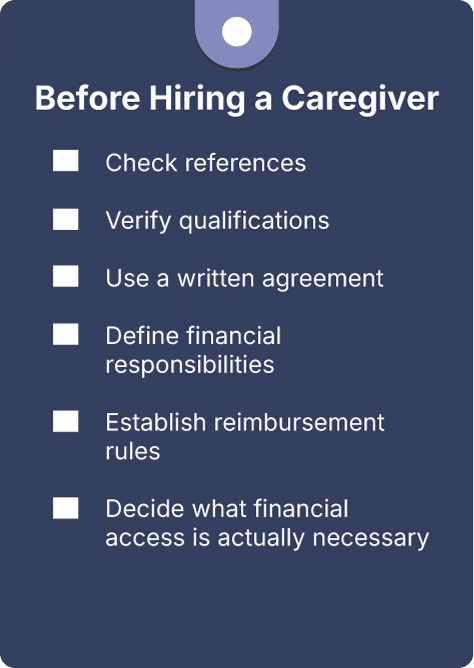
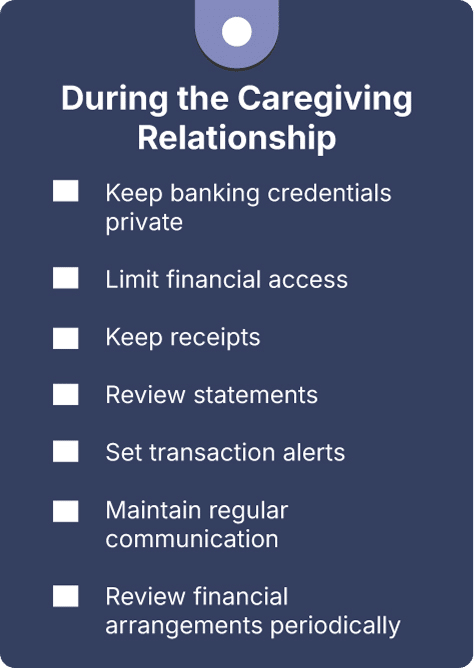
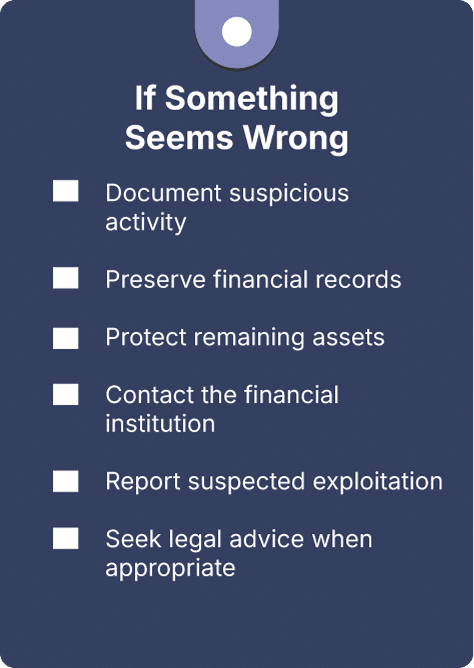
Caregiver Fraud Prevention Checklist