
Common Terminology Used in Mass Arbitration Cases
Home • Free Resources & Legal Guides • Common Terminology Used in Mass Arbitration Cases
- March 23, 2026
When you join a mass arbitration against a major corporation like Yahoo or Vivid Seats, you will encounter specific “legalese” that describes how your case moves from a complaint to compensation. Understanding these terms isn’t just about sounding like an expert. It’s about knowing your rights and the value of your claim.
- Key Takeaways
- Mass arbitration and class actions help groups of individuals address harm caused by the same business, but they operate differently, affecting outcomes, timelines, and control over claims.
- Mass arbitration handles many individual claims under arbitration rules, often faster and more private, while class actions consolidate claims into a single lawsuit, with court oversight and public records.
- Mass arbitration gives claimants more control but requires managing individual claims, while class actions share legal risks and costs but may limit individual decision-making.
- Working with experienced lawyers helps claimants navigate procedures, costs, and strategy, and people harmed in these circumstances may have the right to pursue financial compensation.
The Basics: Litigation vs. Arbitration
To understand mass arbitration, you first need to understand the “playing field.” Most people are familiar with litigation, which takes place in a public courtroom with a judge and jury. However, most modern corporate contracts force disputes into a different arena.
Arbitration
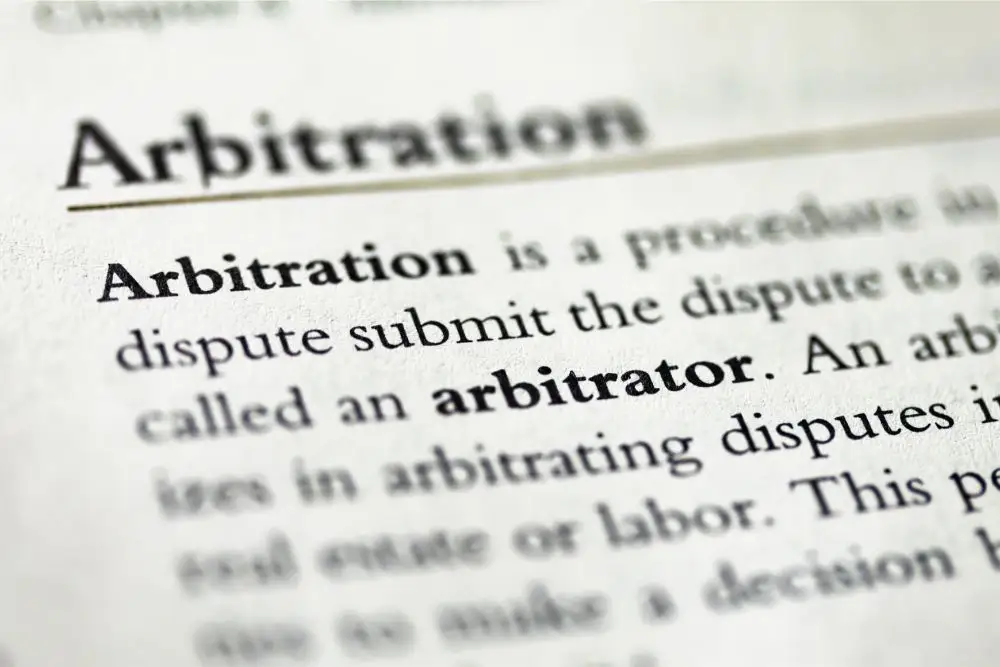
Arbitration is a private dispute resolution process. Instead of a government-appointed judge, a neutral third party (the Arbitrator) hears the evidence and makes a final, binding decision. Think of it as a “private court.” It is generally faster and less formal than traditional litigation, but the rules are strict, and the decisions are usually final.
Mass Arbitration
While a Class Action is one giant lawsuit representing thousands of people, Mass Arbitration is a collection of thousands of individual arbitration cases filed against the same company at the same time for the same reason. Because companies started putting “Class Action Waivers” in their fine print to avoid big lawsuits, lawyers pivoted to filing thousands of individual cases simultaneously. This creates massive pressure on the company because it must deal with each person’s claim individually.
The Arbitrator
The Arbitrator is the person who acts as the judge and jury. They are typically an experienced lawyer or retired judge. Their job is to remain neutral, review the facts provided by both you and the company, and issue a “Final Award” (the decision).
Key Players in Your Case
When you receive emails from Class Action U or our law firm partners, you’ll see specific titles used for the people involved.
Claimant (You)
In a traditional lawsuit, you are the “Plaintiff.” In arbitration, you are the Claimant. You are the person “claiming” that the company caused you harm, whether through a data breach, hidden fees, or unpaid wages.
Respondent (The Company)
The corporation you are filing against is the Respondent. They are “responding” to your demand for compensation. In mass actions, the Respondent is often a Fortune 500 company with a massive legal team.
Counsel (Your Legal Team)
Counsel is simply another word for your attorneys. You may see terms like Lead Counsel (the primary firm managing the overall strategy) or Co-Counsel (partner firms assisting with the workload). Firms like Milberg PLLC and KO Lawyers act as your counsel, representing your interests against the Respondent.
ADR Provider
ADR stands for Alternative Dispute Resolution. An ADR Provider is the organization that manages the logistics of the arbitration. The two most common providers in the U.S. are the American Arbitration Association (AAA) and JAMS. They provide the rules, the digital filing systems, and the list of available Arbitrators.
The Paperwork: Common Legal Filings
Every legal action starts with a paper trail. In mass arbitration, these documents define the boundaries of your case.
Demand for Arbitration
This is the document that officially kicks off your case. It is the equivalent of a “Complaint” in a normal court. It outlines who you are, what the company did wrong, and how much money you are asking for. When our partners file this on your behalf, your case is officially active.
Terms of Service (ToS)
You’ve seen these: the long, boring blocks of text you have to check “I Agree” to when signing up for an app or buying a ticket. The ToS is a legal contract. Most mass arbitrations are based on the company violating its own ToS or including unfair “hidden” clauses within them.
Arbitration Clause
Tucked inside the Terms of Service is usually an Arbitration Clause. This specific paragraph says, “By using this service, you agree not to sue us in court and instead use private arbitration.” While companies used these to protect themselves, mass arbitration uses these same clauses to hold them accountable on a massive scale.
Class Action Waiver
This is a specific part of the arbitration clause where you “waive” your right to join a class action. This is the reason why Mass Arbitration exists; since you can’t sue as one big group, lawyers file thousands of individual “demands” instead.
The "Money" Terms: Costs and Compensation
This is the section most users are most concerned about. Understanding the financial terminology ensures you know exactly where your money is going.
Filing Fees
To start an arbitration, someone has to pay a fee to the ADR Provider (like AAA). These fees are much higher than court fees—often ranging from $1,500 to $5,000 per case. One of the biggest advantages of mass arbitration is that most consumer contracts require the Respondent (the company) to pay these fees. When 10,000 people file, the company could owe $15 million in filing fees alone before the case even starts.
Contingency Fee
This is the “No Win, No Fee” model. Firms like Milberg work on a Contingency Fee basis, meaning they take a percentage of the final settlement or award. You pay $0 out-of-pocket. If the attorneys don’t win your case, they don’t get paid, and you don’t owe them for the work they did.
Settlement vs. Award
A Settlement is a voluntary agreement where the company agrees to pay you a certain amount to drop the case. Most mass arbitrations end in a settlement. A Final Award is a decision made by the Arbitrator after a hearing. An award is binding, meaning the company must pay it by law.
Statutory Damages
Some laws, such as the Video Privacy Protection Act (VPPA) and the Telephone Consumer Protection Act (TCPA), have “built-in” penalties for violations. For example, a law might say a company must pay $2,500 per violation. These are called Statutory Damages because the amount is set by a “statute” (a law) rather than just being based on your personal financial loss.
The Process: Steps to Resolution
Mass arbitration moves through specific phases. Knowing these terms helps you understand why some parts of the case take longer than others.
Tolling
Usually, there is a time limit to file a case, known as the Statute of Limitations. Tolling is a legal “pause button.” If a case is “tolled,” the clock stops ticking, giving your lawyers more time to gather evidence and file your claim without the deadline expiring.
Discovery
This is the “fact-finding” phase. During Discovery, your lawyers demand that the company hand over internal emails, data logs, and records to prove their misconduct. In a data breach case, discovery is used to determine exactly when the company knew it had been hacked.
Bellwether Trials
In a mass arbitration with 50,000 people, it’s impossible to hold 50,000 separate hearings at once. Instead, the parties select a small handful of “test cases” known as Bellwether Trials. The results of these few cases help both sides decide what a fair settlement amount is for the remaining thousands of people.
Frequently Confused Terms
Opt-in vs. Opt-out
In a Class Action, you are usually “in” unless you Opt Out. In Mass Arbitration, you are “out” unless you Opt In. This is why it is so important to sign your representation agreement and provide your info—if you don’t actively join, you won’t get paid.
Binding vs. Non-Binding
Almost all mass arbitration is Binding. This means that once the Arbitrator makes a decision, it is final. You cannot “appeal” to a higher court just because you didn’t like the result, and neither can the company.
Confidentiality
Unlike a public trial, arbitration is often Confidential. The specific details of your settlement or the evidence uncovered might not be allowed to be shared publicly. This is why you often see “undisclosed settlements” in the news.
Ready to Use Your Knowledge?
Now that you speak the language of the legal system, you can see that mass arbitration is a structured, powerful way to fight for your rights. You aren’t just a number; you are a Claimant with a Demand backed by Counsel.
New cases and investigations, settlement deadlines, and news straight to your inbox.